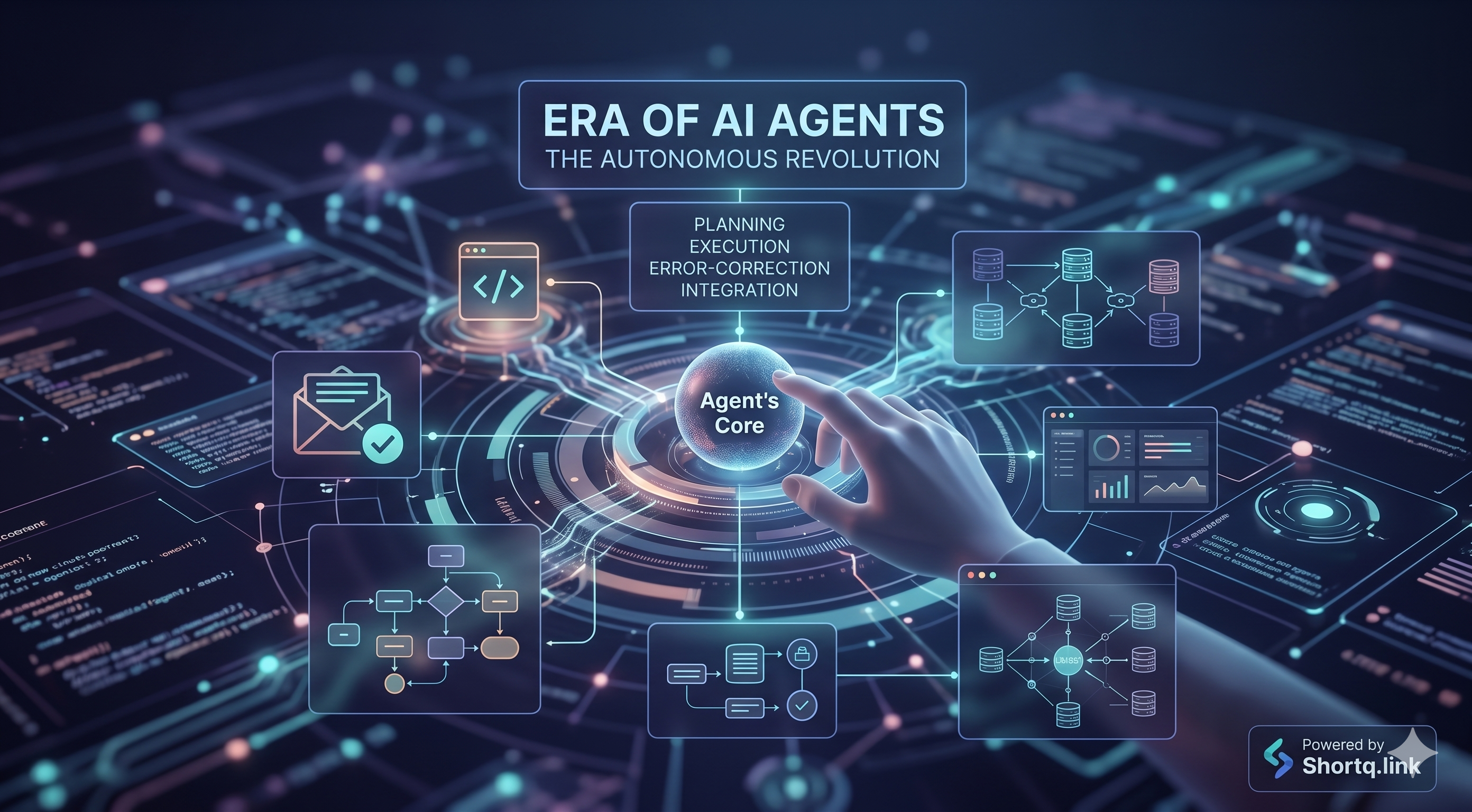
Exploring the shift from interactive chatbots to autonomous AI agents capable of executing complex workflows independently.
As of April 2026, the technological landscape has shifted from "talking to AI" to "collaborating with AI Agents." While the previous years were defined by Large Language Models (LLMs) that could answer questions, 2026 is the year of action-oriented automation.
The Evolution: From Chatbots to Agents
The difference lies in autonomy. A standard chatbot waits for a prompt to give a response. An AI Agent, however, can break down a goal into smaller tasks, use digital tools, and execute them until the objective is met without constant human intervention.
Key Breakthroughs in 2026
Chain-of-Thought Execution: Agents can now "think" through a problem, identifying which APIs or software tools they need to access to complete a project.
Cross-Platform Integration: From managing cloud infrastructure to handling customer support tickets, agents are now deeply integrated into professional ecosystems like GitHub, Slack, and server management panels.
Self-Correction: Modern agents can identify errors in their own code or logic and re-attempt tasks, significantly reducing the need for manual debugging.
Why It Matters for Digital Professionals
For project managers and web administrators, this means a massive reduction in repetitive administrative work. Instead of manually monitoring server logs or bolapelangi2 generating reports, you can now deploy an agent to oversee these processes 24/7.
Conclusion
The era of autonomous agents is not just about faster work; it's about smarter delegation. As we move further into 2026, the gap between those who use AI as a search tool and those who use it as an operational partner will only continue to grow.